

Stablecoins’ growth and ties to traditional finance raise policy challenges and potential risks of spillovers, wrote researchers in a Bank for International Settlements policy bulletin.
- Policy challenges range from preserving financial integrity to mitigating financial stability risks.
- Broader use of foreign currency-denominated stablecoins could raise concerns about monetary sovereignty and, in some jurisdictions, erode the effectiveness of existing foreign exchange regulations.
- The principle of “same risks, same regulation” faces limitations in the context of stablecoins, highlighting the need for tailored regulatory approaches that address the nature and specific features of stablecoins.
Related to repo, the paper noted that the management of stablecoin reserves can further deepen interconnectedness with the traditional financial system, extending beyond treasury holdings. For instance, some stablecoin issuers rely on reverse repos to generate additional income.
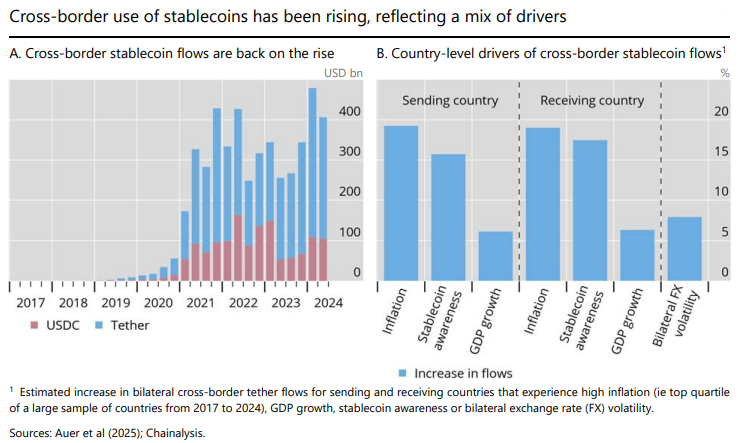
During market stress, this could strain repo market liquidity, with spillovers on other short-term dollar funding markets. In addition, interconnections arise through direct exposure to banks via deposit holdings, which are mandated by regulatory requirements in some jurisdictions. Stablecoins effectively pool dispersed (largely) insured retail deposits and partly channel the funds back to bank balance sheets as uninsured wholesale deposits or through reverse repos.