

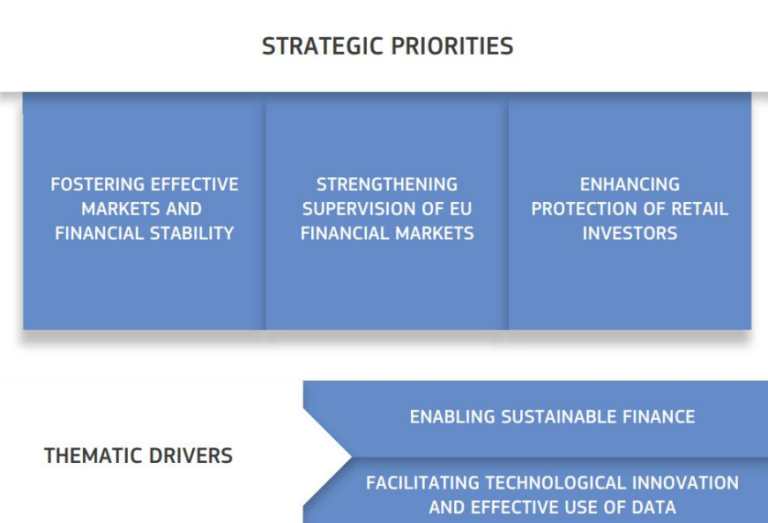
The European Securities and Markets Authority (ESMA) published its 2026 Annual Work Program, which is guided by its multi-annual strategy for 2023–2028 and sets out three strategic priorities and two thematic drivers.
Verena Ross, chair of ESMA, said in a statement: “A core focus in 2026 is ESMA’s ambitious, and at the same time pragmatic, approach to simplification and burden reduction. We are pursuing a holistic strategy to streamline rules, enhance risk-based supervision and ensure proportionate reporting requirements across the ESMA remit. In that spirit, we will continue the work linked to three landmark consultations already launched in 2025, on integrated funds reporting, transactional reporting and the investor journey.
“We also stand ready to play a central role in the legislative initiatives set out in the upcoming SIU [savings investment union] Strategy, including the removal of barriers in trading and post-trading, facilitating cross-border provision of funds, and strengthening supervision across the EU single market.”
Natasha Cazenave, executive director of ESMA, said in a statement: “ESMA’s ongoing supervisory responsibilities will expand in 2026, through the authorization and supervision of Consolidated Tape Providers (CTPs), external reviewers under the European Green Bond framework (EUGBR), ESG rating providers, and the extension of third-country benchmark supervision. ESMA and its fellow European Supervisory Authorities will also, for the first time, jointly exercise the oversight of critical third party providers under the Digital Operational Resilience Act (DORA).
“These new responsibilities will complement our existing mandates and be subject to our risk based, data driven and outcome focused supervision. Through extensive outreach and preparatory work, ESMA supervisory teams are gearing up to take on these new responsibilities.”
SIU support includes aligning supervisory practices across member states, enhancing market data capabilities, and actively contributing to upcoming reforms designed to create a more integrated and globally competitive EU financial system. ESMA also aims at seizing opportunities arising from digitalization, for example by facilitating the simplification and use of clear language in disclosures.
ESMA’s activities will remain closely aligned with the agenda of the European Commission and co-legislators, maintaining the agility needed to address evolving regulatory, economic, and technological landscapes. This responsiveness is crucial as volatility, uncertainty, and rapid change shape the global environment and impact EU financial markets. Given the significance of the forthcoming proposals under the Savings and Investments Union, ESMA stands ready to provide its technical expertise and support to the preparation and implementation of the new legislative files that will be launched.
Beyond the priorities coming from the SIU strategy, ESMA will continue supporting implementation of key legislative files agreed under the previous legislature, notably the European Market Infrastructure Regulation (EMIR 3) and the European Single Access Point (ESAP).
Other ongoing legislative files which, depending on progress, may require ESMA’s attention in 2026 are the Retail Investment Strategy (RIS), as well as the review of the packaged retail investment and insurance products (PRIIPS), Sustainable Finance Disclosure Regulation (SFDR) and Securitisation Regulation. ESMA will ensure that it integrates the principles of Simplification and Burden Reduction across all its activities and will follow up on the 2025 ‘flagship’ projects seeking simplification and efficiencies in disclosure and reporting frameworks.
Data and market integration
ESMA will focus on enhancing data capabilities and promoting innovation across the EU financial sector. Key projects for 2026 include the rollout of the ESMA Data Platform, centralization studies, and the development of AI-powered supervisory tools. These initiatives will bring common benefits to both ESMA and the National Competent Authorities, improving market efficiency and transparency through the support that data provides for risk-based and data-driven supervision across Europe.
In the digital finance sector ESMA will continue to focus on the effective implementation of MiCA, as it is key to ensuring investor protection and the orderly functioning of crypto-asset markets. ESMA’s supervisory convergence efforts will remain focused notably on the authorization and supervision of crypto-asset service providers (CASPs).
Finally, in line with the EU’s ambition to accelerate the settlement cycle to T+1 by 11 October 2027, ESMA will also coordinate closely with market participants to ensure the smooth transition and preparedness of the financial sector for this event.