

ThetaRay, a provider of cognitive artificial intelligence (AI) financial crime compliance, released its US Banking & Fintech Trust Report 2025 on consumer attitudes toward anti-money laundering (AML) practices. The report reveals that 84% of consumers would switch banks if linked to financial crime, and 87% would actively warn family and friends against using that institution.
Brand reputation is one of a financial institution’s most valuable and vulnerable assets, built over years through trust, consistency, and significant investment. Encouragingly, 93% of respondents express either positive or neutral sentiments toward their current financial providers, suggesting a strong foundation of customer trust. But that trust is fragile: a single incident of financial crime can shatter a reputation overnight, triggering customer attrition, regulatory penalties, and years of costly recovery.
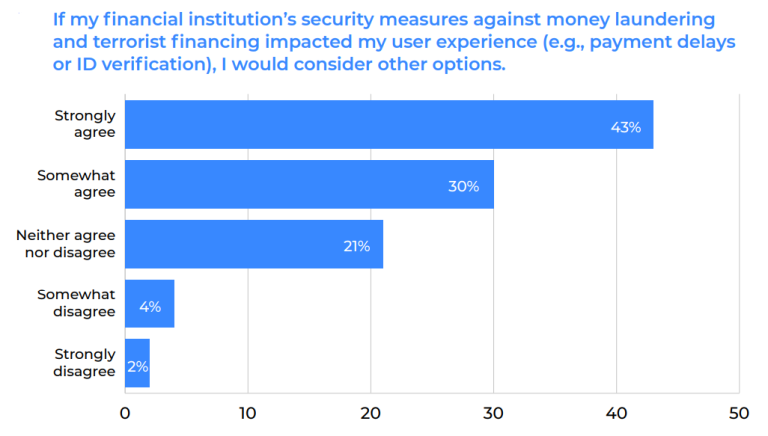
Nearly three in four respondents said they would consider switching banks if AML controls — like payment delays or intrusive checks — disrupted their experience. These numbers highlight the reputational stakes at play and the urgent need to strike the right balance between effective compliance and frictionless service.
Legacy, rule-based AML systems, aren’t up to the task. According to Datos Insights, they generate false positives at rates as high as 90–95%, overwhelming teams and frustrating legitimate customers. Reducing this noise, and the risk it creates, requires a new generation of AI-powered solutions that deliver sharper detection without compromising customer experience.
“Financial institutions can’t afford to choose between customer experience and compliance; both are non-negotiable,” said Reynolds in a statement. “The strength of your financial crime defenses is part of your brand. Institutions that lead with intelligent, AI-driven compliance aren’t just mitigating risk. They’re earning customer trust, enabling faster transactions, and ensuring confident growth.”